T2 Tech / Health IT Services
Virtual Desktop Infrastructure (VDI) Services
HIPAA-ready virtual desktop infrastructure built for healthcare. T2 Group designs and deploys VDI and end user computing solutions that actually work on the floor.
In a modern hospital, the desktop must follow the clinician. A nurse should tap a badge at the floor workstation and resume the same session from the previous room. A physician should reach the EHR from an office, a consult room, or a home office with identical security and identical performance. Legacy fat-client computing cannot deliver that; modern virtual desktop infrastructure (VDI) combined with thoughtful end user computing design can.
T2 Group has implemented VDI and end user computing for healthcare organizations ranging from community hospitals to academic medical centers. Our practice covers VMware Horizon, Citrix DaaS, and Azure Virtual Desktop, along with the identity, imaging, and endpoint elements that make VDI succeed in a clinical environment.
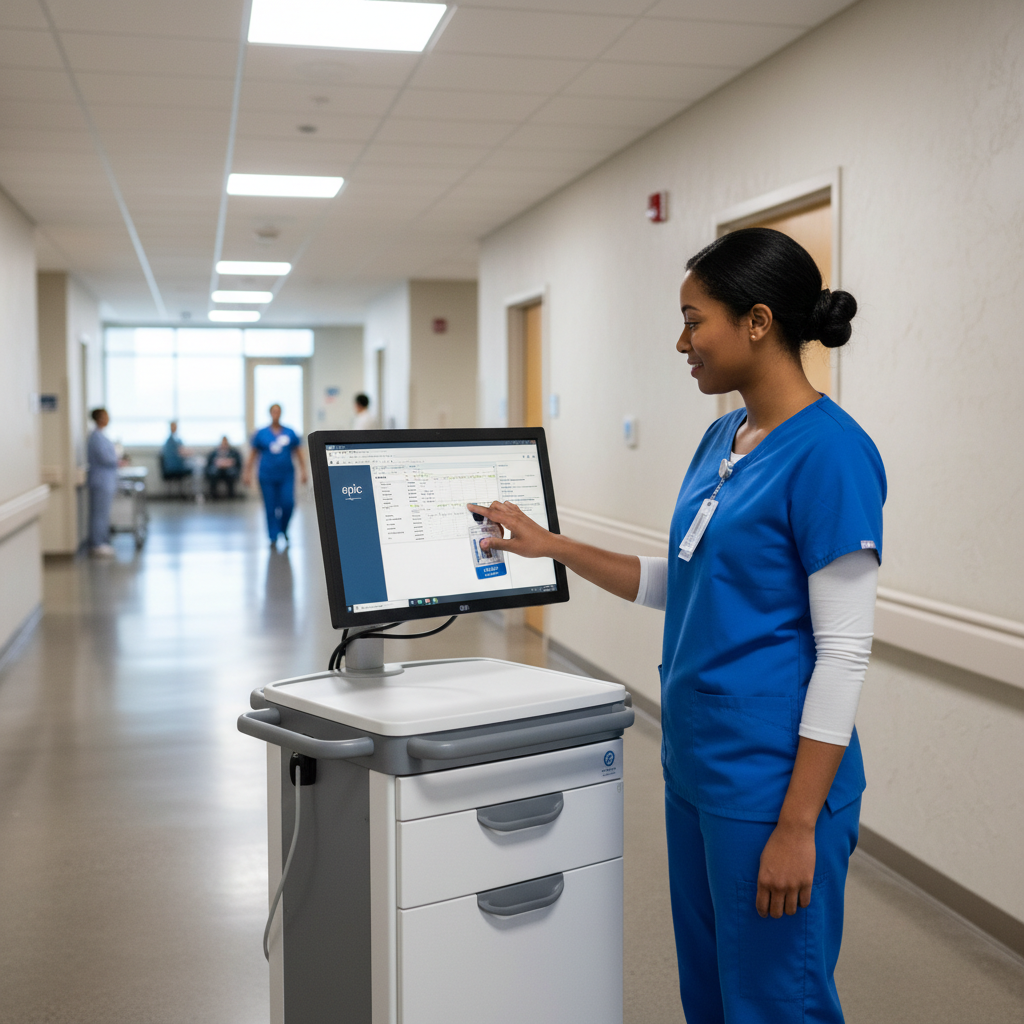
What is Virtual Desktop Infrastructure (VDI)?
Virtual desktop infrastructure (VDI) delivers clinician desktops from a central platform to any endpoint through secure remote sessions. Healthcare VDI combined with end user computing solutions enables tap-and-go authentication, remote radiology reading, 3 to 8 second clinical login times, and HIPAA-aligned session security across VMware Horizon, Citrix DaaS, and Azure Virtual Desktop.
End User Computing Solutions
End user computing solutions in healthcare are about more than delivering a desktop. They are about delivering the clinician's workflow wherever the clinician needs it, with the right peripherals, the right authentication, and the right performance. T2 designs end user computing programs that span VDI, physical endpoints, tap-and-go authentication, peripheral management, mobile, and print.
We have deployed tap-in badge workflows across inpatient units, imaging suites, and procedural areas. We have integrated Imprivata with VMware Horizon and Citrix DaaS. We have rebuilt endpoint gold images for health systems carrying 15 years of legacy technical debt. And we have done it while keeping the EHR available on every shift.
Capabilities in Our End User Computing Practice
- VDI platform selection and implementation (VMware Horizon, Citrix DaaS, Azure Virtual Desktop)
- Tap-and-go single sign-on integration (Imprivata OneSign and equivalent)
- Endpoint fleet standardization and gold image engineering
- Thin client, zero client, and shared workstation deployment
- Peripheral integration: signature pads, card readers, specialty medical peripherals
- Remote workforce enablement for clinical and non-clinical users
- Print, capture, and mobile strategy
VDI for Healthcare Organizations
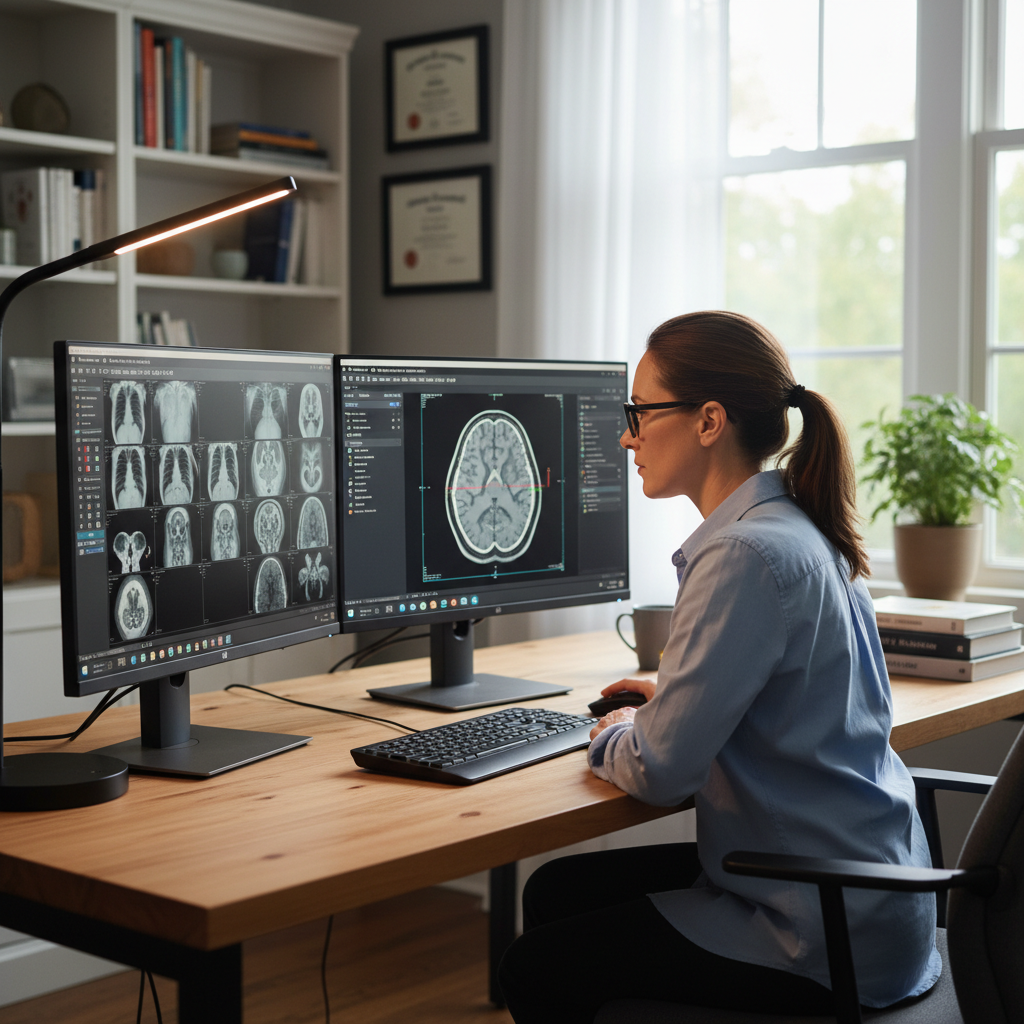
Healthcare VDI requires specific latency and peripheral requirements. T2 leads VDI deployments that target clinical application profiling, architectural design and compatibility, image configuration, login performance, and experience-based validation.
T2 Agile Methodology for VDI
VDI projects fail when teams attempt a single, monolithic cutover across thousands of endpoints. T2's hybrid-agile model delivers VDI in two-week sprints, each producing a working, testable deliverable: a tuned image, a validated persona, a fully integrated peripheral, or a clinical unit ready for pilot.
Daily standups across infrastructure, identity, and clinical informatics keep dependencies visible. Sprint reviews put clinicians in front of working sessions before the next sprint begins.
Healthcare VDI Implementation Process
Clinical Application Profiling
We begin by profiling clinical applications to understand latency, graphics, audio, and peripheral requirements across different user personas, including PACS viewers, dictation tools, and specialty applications.
Architecture Design and Compatibility Planning
Based on profiling insights, we design a VDI architecture that supports high-performance graphics, low-latency audio, and integration with legacy systems such as Citrix and published-app environments.
Image Configuration and Application Delivery Optimization
We configure desktop images and optimize application delivery to ensure seamless performance, including tuning for profile management and efficient application relaunch.
Login Performance Optimization
Login workflows are engineered for speed, achieving sub-15-second tap-to-ready times with integrated SSO, ensuring clinicians can access systems instantly during critical scenarios.
Validation and Persona-Based Experience Tuning
We validate performance across clinical roles, ensuring each user persona experiences the correct session behavior, stability, and responsiveness required for their workflows.
Inside a T2 VDI Sprint
Sprint planning converts the VDI backlog into committed deliverables: a persona tuned, a peripheral certified, a unit piloted. Daily 15-minute standups synchronize infrastructure, identity, image engineering, and clinical informatics.
Sprint reviews demonstrate live sessions to clinicians, who validate login speed, peripheral behavior, and application performance in their own workflow. Retrospectives close each sprint with concrete adjustments. The cadence surfaces login-time regressions, peripheral conflicts, and profile issues while they are still cheap to fix.
HIPAA-Compliant VDI Implementation
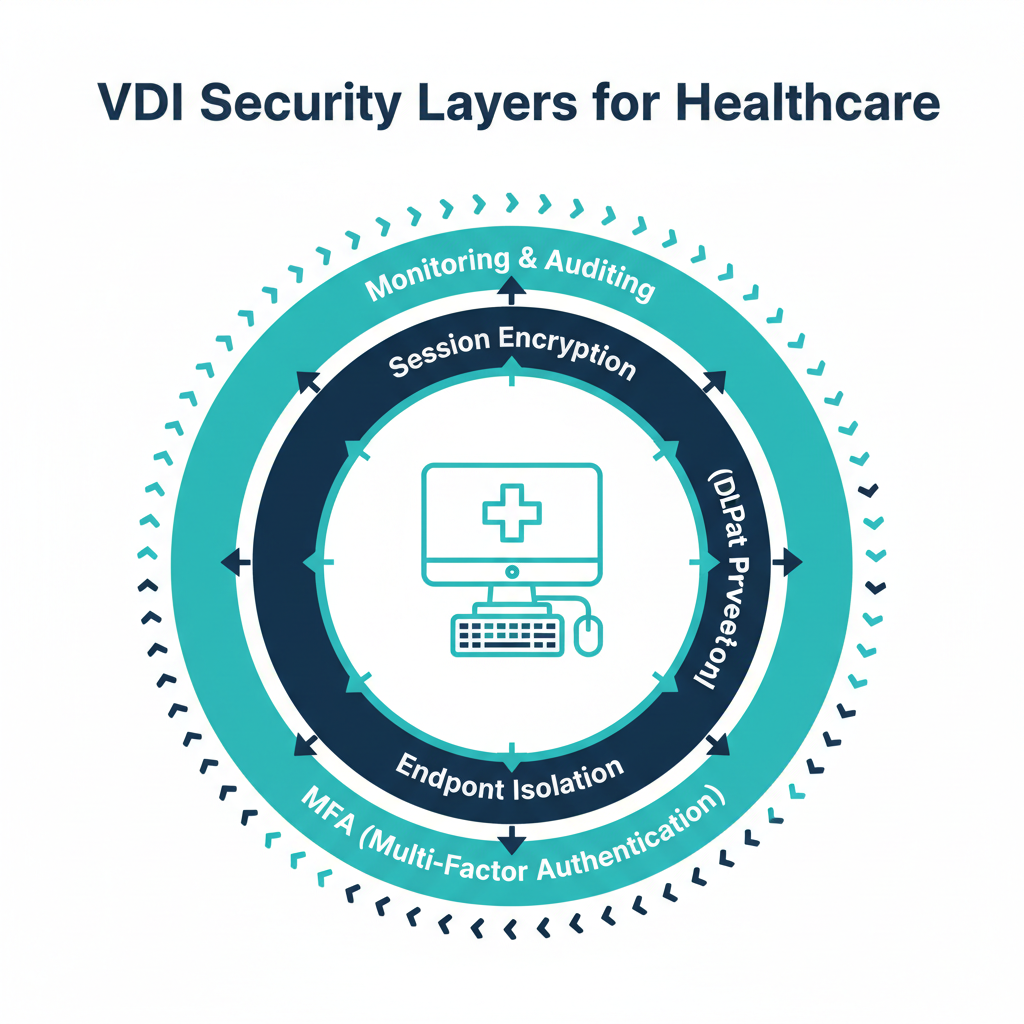
Our HIPAA-compliant VDI implementation covers all the data security bases: remote access, bring-your-own-device security, privileged access, session monitoring, ransomware containment and recovery, and data protection.
Secure Remote Access for Clinicians
T2 enables HIPAA-compliant VDI environments with conditional access, MFA, and Microsoft Entra ID integration, allowing clinicians to securely access systems from any location without disrupting workflows.
Bring-Your-Own Device (BYOD) Security
We implement endpoint isolation and session-level data protection to support BYOD scenarios, ensuring sensitive patient data remains secure even on unmanaged devices.
Privileged Access and Session Monitoring
For administrators and high-risk roles, T2 deploys session recording and advanced access controls to maintain visibility, accountability, and compliance across critical systems.
Ransomware Containment and Recovery
VDI environments are designed with ephemeral endpoints and centralized data storage, allowing rapid recovery by recomposing desktops instead of rebuilding individual machines after an attack.
Data Protection and Compliance Enforcement
We apply session-based data loss prevention controls to ensure patient data is protected at all times, supporting HIPAA compliance and reducing risk of data leakage.
Our Kootenai Health VDI and SSO white paper documents how T2 built a clinical computing environment that supports top-notch performance and scalability as the environment grows, with dependable single sign-on across the clinical workstation fleet. For a step-by-step rollout framework, see our VDI deployment strategy for healthcare.
Why T2 Group
Generic VDI vendors sell platforms. T2 delivers healthcare outcomes: faster clinician login, secure remote access, reduced endpoint management cost, and a platform that gets stronger after ransomware rather than weaker.
Agile as a Clinician Partnership Model
The T2 agile model treats nursing, physicians, informatics, IT infrastructure, and security as a single delivery team rather than separate constituencies trading tickets. Sprint reviews, working session demos, and shared backlogs replace status decks and steering committee theater.
Clinicians see real progress every two weeks and shape the next sprint based on what they experience at the workstation. The shared outcome is a desktop that follows the clinician without slowing them down.
- Documented healthcare VDI case study at Kootenai Health
- Experience across VMware Horizon, Citrix DaaS, and Azure Virtual Desktop
- Deep Imprivata and SSO integration expertise for clinical tap-in workflow
- Vendor-neutral platform selection and sizing
- Hybrid-agile delivery with two-week iterations and clinician validation
Frequently Asked Questions
Virtual desktop infrastructure VDI for healthcare.
Why Hybrid-Agile Fits VDI Delivery
Waterfall VDI projects defer real-world clinician feedback to a single, high-risk cutover. Pure agile struggles against change advisory boards, security review gates, and HIPAA documentation that hospital governance requires. T2's hybrid model keeps sprint-based delivery and clinician validation at the core while preserving the structured documentation, traceability, and sign-off gates that hospital IT, security, and compliance demand. The result: faster time-to-value with the audit trail intact.
Related T2 Services
Schedule a Consultation
Rebuild your clinical desktop experience.
Schedule a 30-minute VDI consultation with T2 Group.