Agile for Financial Leaders: Kevin Torf Calls on Healthcare Leaders to Rethink Execution at AAHAM 2026
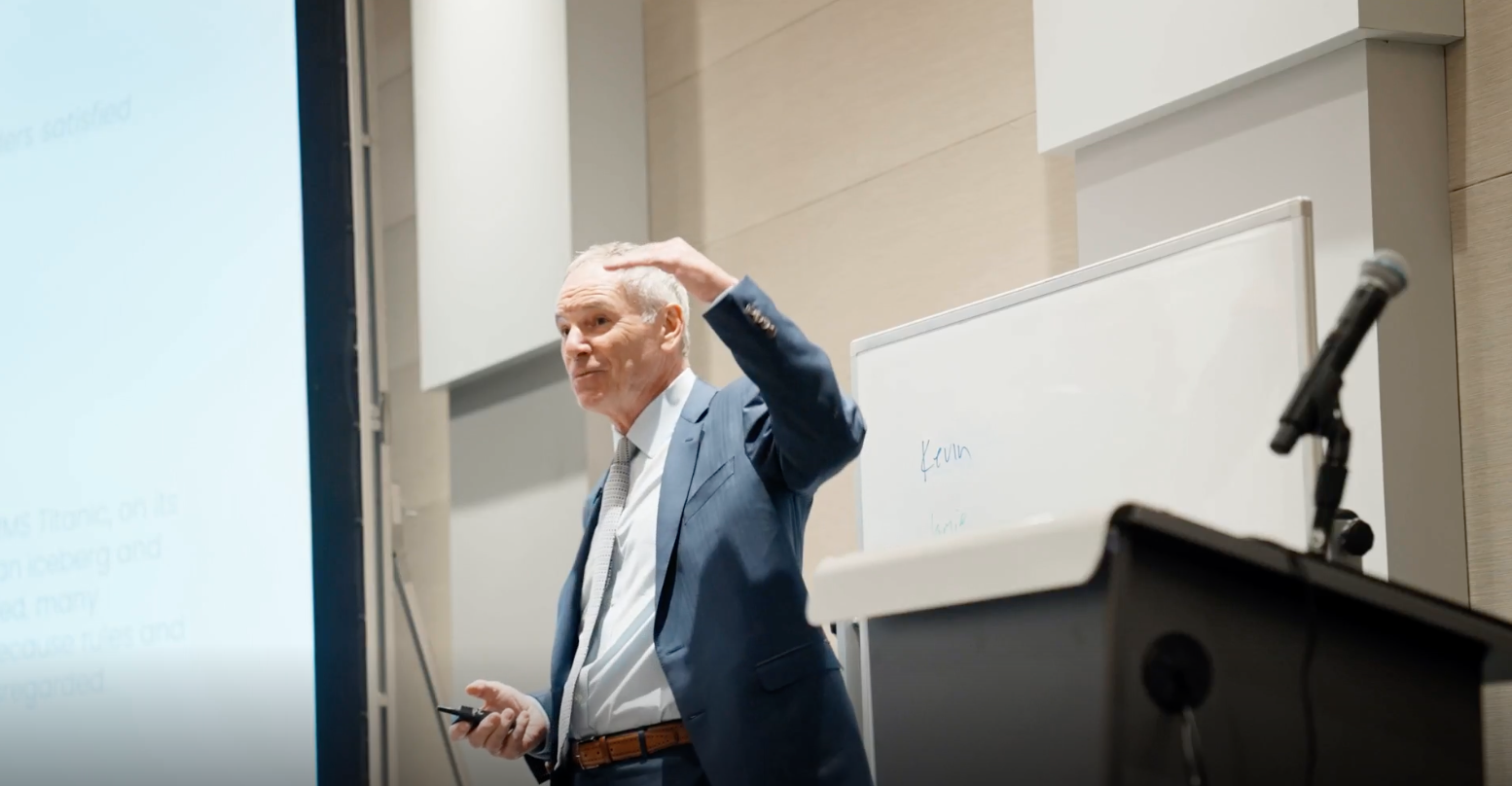
At the 2026 AAHAM Annual National Institute, T2 Group Managing Partner Kevin Torf demonstrated how smaller teams, faster delivery, and a shift in organizational culture can transform healthcare operations without increasing headcount.
What if improving productivity across your revenue cycle had less to do with adding resources and more to do with changing how teams work?
That was the central challenge Kevin Torf brought to healthcare financial leaders at the American Association of Healthcare Administrative Management (AAHAM) Annual National Institute on October 19 in Philadelphia.
In his keynote, Agile for Financial Leaders, Torf moved beyond traditional project management theory. Through live audience exercises, real healthcare examples, and practical leadership lessons, he demonstrated how Agile principles can help organizations reduce delays, improve accountability, and deliver measurable business value.
His message was simple: Think small. Work together. Measure outcomes.
Making Agile Tangible: 20 Coins, Three Volunteers, One Lesson
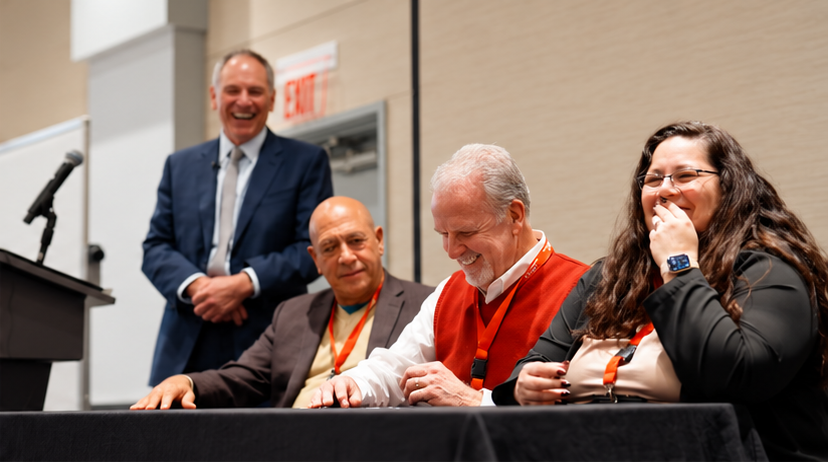
Rather than simply explaining Agile, Torf invited three audience members onstage to demonstrate it.
Each volunteer was asked to flip 20 coins before passing the entire stack to the next person. The process took 90 seconds, with participants waiting for the previous person to finish before they could begin.
Then Torf changed one rule. Instead of passing all 20 coins together, participants passed them individually as they completed each flip.
The result? The same work was completed in just 31 seconds.
The exercise illustrated a fundamental Agile principle: smaller batches and continuous collaboration can dramatically accelerate delivery without adding resources.
For healthcare organizations, the implications extend well beyond project management. Whether improving patient access, addressing denials, or implementing new technology, teams can begin delivering value earlier rather than waiting months for an entire project to finish.
Why Organizational Culture Matters More Than Agile Mechanics
Torf emphasized that learning the mechanics of Agile is relatively straightforward. Changing the culture that supports it is considerably harder.
Traditional management often assigns deadlines and expects teams to deliver. Agile reverses that dynamic by empowering the people closest to the work to estimate effort, identify obstacles, and make commitments.
When teams participate in setting expectations, accountability becomes something they own rather than something imposed on them.
This requires leaders to move away from directing every activity and toward creating an environment built on trust, transparency, and shared responsibility.
For financial leaders accustomed to managing budgets, timelines, and performance targets, that shift can be challenging. But it is also essential to sustaining improvements.
A Second Exercise Demonstrates the Cost of Multitasking
In another interactive demonstration, Torf invited a volunteer to write two names on a whiteboard, alternating letters and switching marker colors with each change.
The task took approximately 35 seconds and resulted in a spelling error.
When the volunteer repeated the exercise by completing one name before starting the other, the task took just five seconds.
The lesson was immediately relevant to healthcare operations.
Teams frequently juggle multiple priorities, respond to competing requests, and divide their attention across numerous initiatives. While everyone appears busy, the constant switching can reduce productivity and delay completion.
Torf challenged leaders to rethink how much work their teams undertake simultaneously and instead prioritize finishing valuable work before starting something new.
From 13 People to Three Teams: A Healthcare Example
Torf reinforced these lessons with a healthcare project involving patient access decision trees across 60 specialties.
Initially, a single 13-person team managed the work across multiple specialties. Progress had stalled.
The approach changed when the work was reorganized into three smaller, focused teams, each concentrating on one specialty at a time.
Productivity tripled without increasing overall staffing. The teams ultimately completed the work across all 60 specialties in just under a year.
The example demonstrated that organizational structure and focus can have a significant impact on execution.
For healthcare financial leaders facing pressure to control costs while improving operational performance, the takeaway is especially relevant: productivity improvements do not always require additional headcount.
The Metric That Matters: Outcomes, Not Activity
Throughout the keynote, Torf emphasized the importance of connecting everyday work to measurable business results.
A team working to reduce denials should understand the denial rate it is trying to improve. A group focused on patient access should see the operational measures that define success.
Without that visibility, employees may complete assigned tasks without understanding how their work contributes to the organization's financial and operational goals.
Torf compared this to playing a sporting event without a scoreboard.
His message to leaders was clear: "This is not about output. It's about outcome."
Agile succeeds when teams understand the value they are expected to create and can see whether their work is making a difference.
Bringing Agile Into the Realities of Healthcare
Healthcare organizations cannot abandon financial oversight, regulatory requirements, or long-term planning in pursuit of faster execution.
That is why Torf advocates a hybrid Agile approach that combines structured governance with iterative delivery.
His methodology, detailed in his book Getting the Job Done, maintains the discipline of traditional project planning while enabling teams to work in shorter cycles, adapt to changing needs, and demonstrate progress more frequently.
The approach recognizes that healthcare leaders need both predictability and flexibility.
The Takeaway for Healthcare Financial Leaders
Torf closed with two principles that captured the keynote's central message: Think small and work together.
The lessons from the coin exercise, the whiteboard demonstration, and the healthcare case example all pointed to the same conclusion.
Improving performance is not simply a matter of asking people to work harder. It requires leaders to rethink how work is organized, how decisions are made, and how success is measured.
For revenue cycle and healthcare financial leaders, Agile offers a practical way to challenge entrenched processes, improve execution, and focus teams on outcomes that matter.
Learn how T2 Group helps healthcare organizations improve project execution through Agile Transformation.
Explore Agile TransformationReady to explore a partnership?
Let's Connect